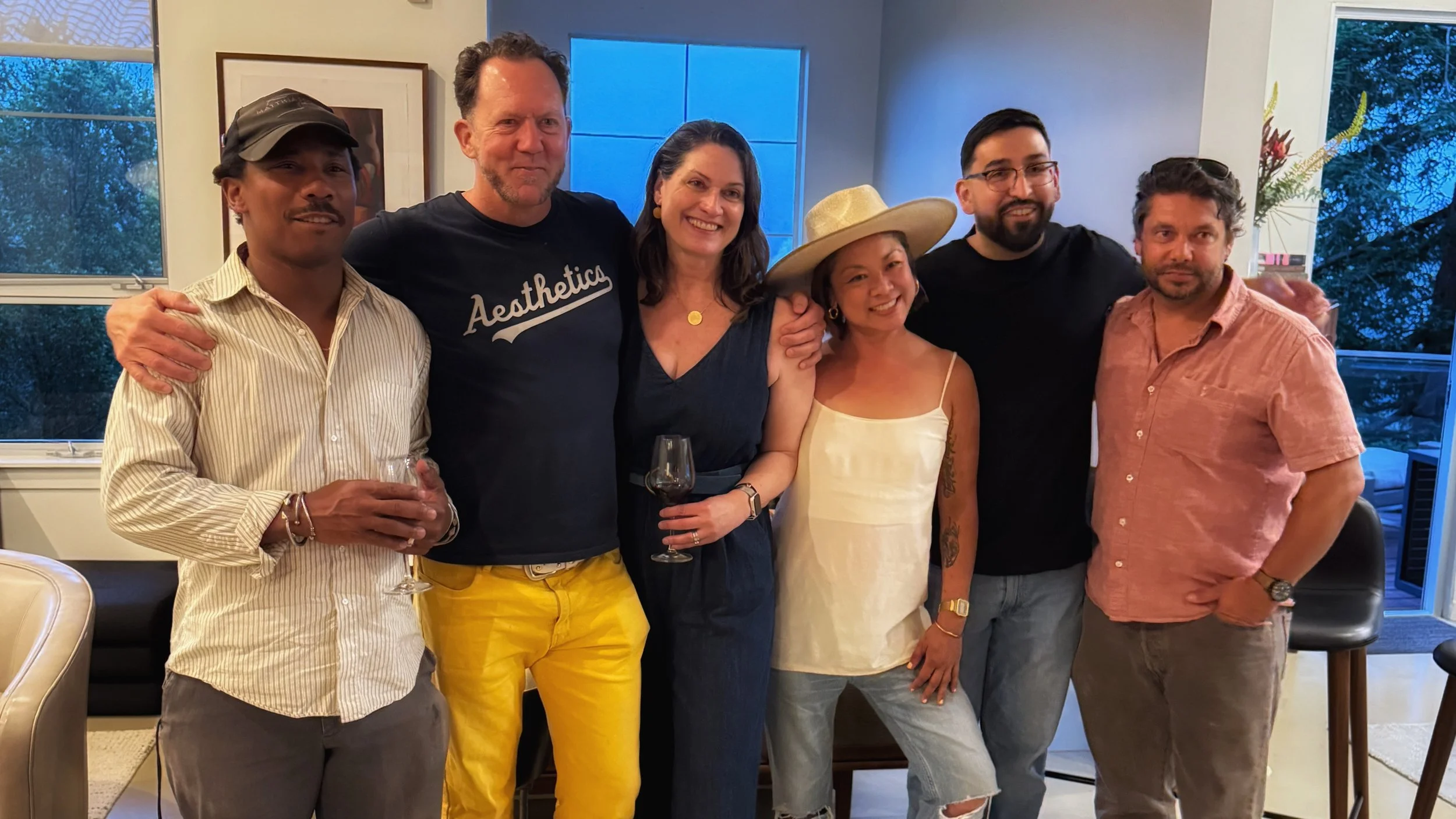
Wine for Change Hosts Four Unfiltered Winemakers + Andrew Sullivan
A Sunday afternoon, a living room full of people thirsty for change, four winemakers with a strong point of view, and a whole lot of wine. That was Wine for Change — the wine social series I host in my home from time to time to combine wine with actions to create positive social change.
For our first 2026 event, we partnered with Andrew Sullivan of Donkey & Goat Winery’s Unfiltered Wine Festival to spotlight four of this year’s festival’s winemakers doing work that matters — in the vineyard, in the community, and well beyond the bottle. As guests streamed in, we warmed up with a few bottles of wine from Donkey & Goat: the Brut Nat, Lily’s Pet Nat, and the Fine & Dandy Rosé. Then we got to business with each winemaker sharing their story and their wines.
The Winemakers and Their Wines
Coral Wang — Maison des Plaisances
Coral Wang founded Maison des Plaisances (translation: House of Pleasures) five years ago in Sonoma after living in a small village in France for several years learning winemaking. Coral’s wines are literal works of art: beautifully hand painted bottles - a nod to her background in fashion and design. Coral is also one of only a few Chinese-American women in the industry and is actively studying the role Chinese immigrants played in the early days of California winemaking to amplify their contributions.
Coral poured two wines for us: Etienne, a crisp and crushable Sauvignon Blanc from Sonoma County made with a little skin contact and a lot of love - plus a fun, chillable red wine blend of 50% Zinfandel and 50% orange wine blend, with grapes donated from Wei Vineyard and proceeds of which benefit The Two Eighty Project.
Coral hosts China Club — her quarterly wine club pick-up parties — at long-standing, family-operated Chinese restaurants in San Francisco. Her last one was at the legendary Sam Wo. You don’t have to be a member to join the next one, so sign up on her website to get the next China Club invitation: https://www.maisondp.com
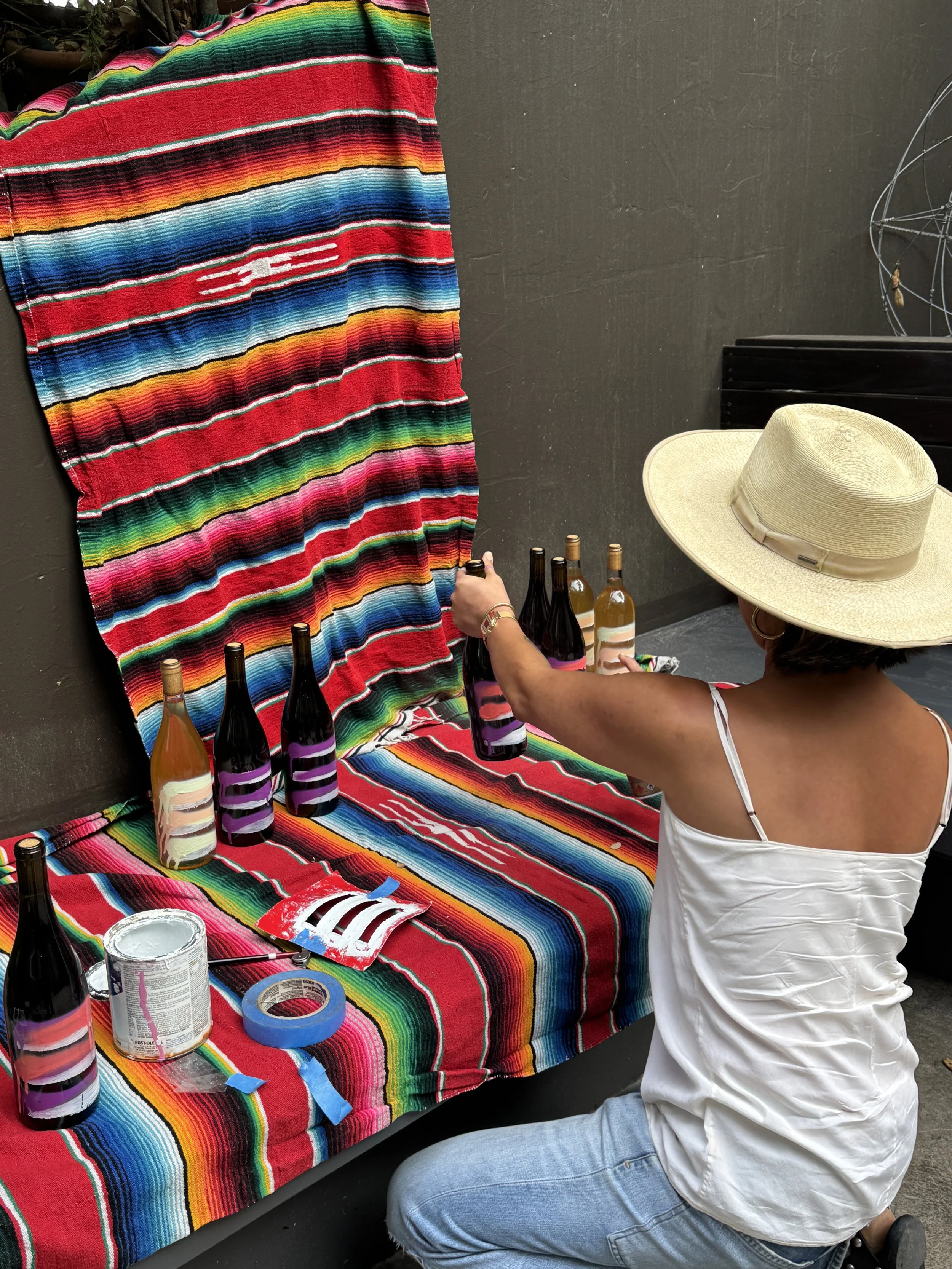
Coral hand painting her wine bottles at the Wine for Change event
David Salazar — Reclamación Wines
David Salazar grew up in the vineyards. As the son of Mexican immigrants who worked in the Monterey County vineyards, David witnessed firsthand the importance of Mexican and immigrant labor in the wine industry. In fact, 68% of U.S. agricultural workers are foreign born. Yet today less than 1% of California wineries are Mexican-owned. He studied viticulture and enology and trained in winemaking across several global wine regions before launching Reclamación Wines to reclaim credit, visibility, and ownership for Latinos in the wine industry.
At Sunday’s event, David poured his lively Grenache Gris (Madera AVA, San Joaquin Valley, 2025) with beautiful stone fruit and citrus notes, a super fun skin-contact Gewurztraminer Pet Nat (Moctezuma Hills, Solano County, 2025), and a beautifully balanced, lighter-style Cabernet Sauvignon (Sonoma Valley, 2024) — each simultaneously expressing depth and levity.
To learn more about David, visit www.reclamacionwines.com and read this profile in Silicon Valley Latino.
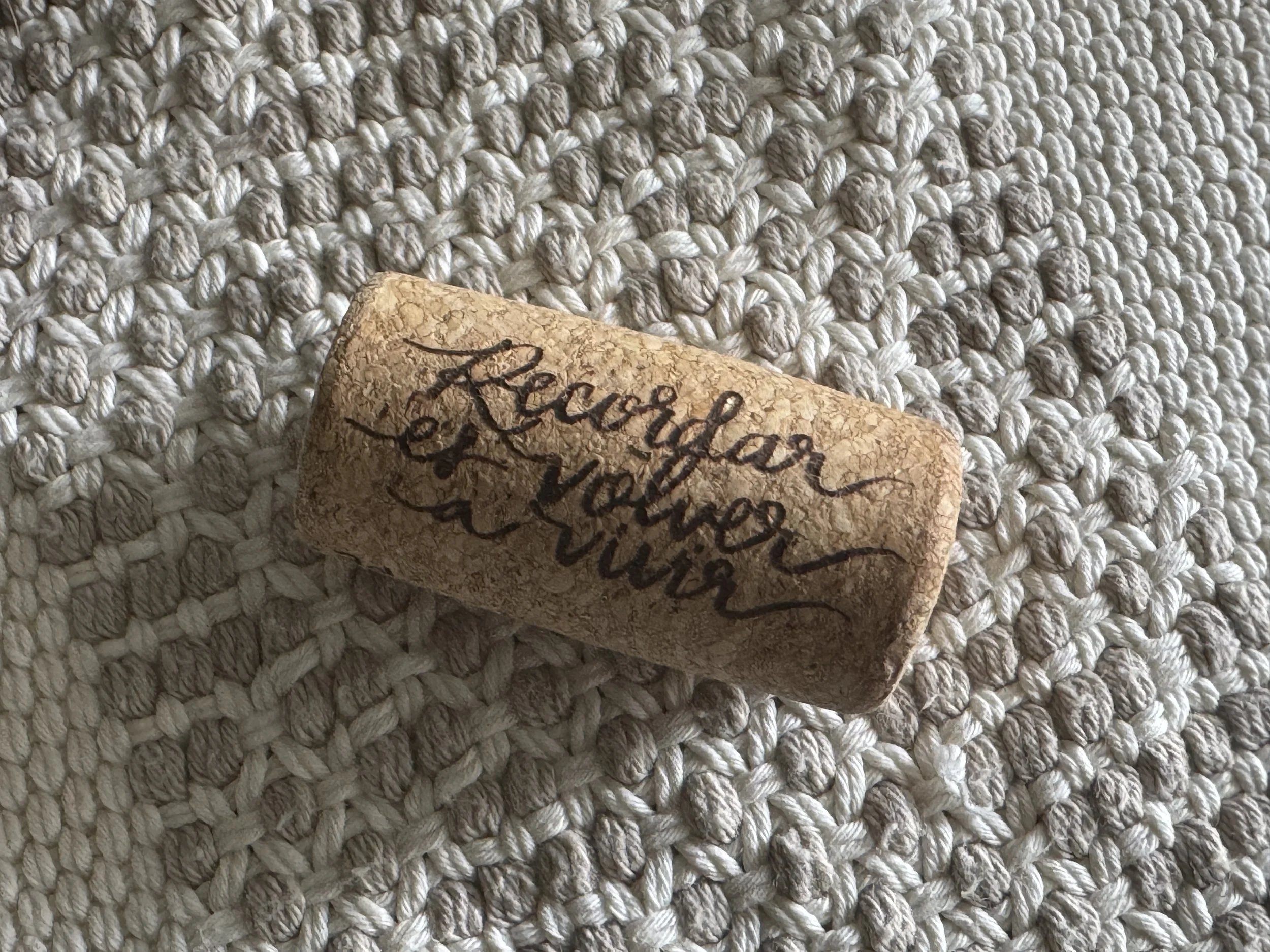
Reclamación cork. Translation: “To remember is to live again.”
Matt Niess — North American Press
Matt Niess is seeking representation of a different kind: representation of native and hybrid grapes. These varieties are naturally suited to withstand climate change — many can be grown without irrigation and are disease resistant. Yet the wine industry remains heavily weighted toward classic European varieties and more well-known wine styles. Matt is making history and showing other winemakers how to produce singular, quality wines that work with nature, not against it. And they taste fantastic.
Matt poured the 2025 Crossroads — a racy and savory Washoe County, Nevada white wine blend in the style of a Bordeaux Blanc, blending Semillon with LaCrosse rather than Sauvignon Blanc. Matt also poured The Sage, a 2025 rosé from Catawba — a grape he reintroduced to California after over 60 years of absence — which I immediately wanted to pair with street tacos to complement the hint of foxy corn tortilla flavor acting as a buttress to the crisp, refreshing wild strawberry notes. The website describes it as “beyond organic”: dry farmed, untouched by any sprays, made with wild yeast, and unfined and unfiltered. Finally, Matt poured the 2024 Hero’s Journey Kelsey Bench Lenoir — a beautiful, light red from the Lenoir grape, a serendipitous cross between European and native vines dating to the 1700s, grown in volcanic soil, with notes of blackberry and spice.
Matt’s pioneering work has landed him on Wine Enthusiast’s Future 40 Tastemakers 2024 and in The New York Times. To learn more and purchase his wines, visit www.northamericanpress.wine.
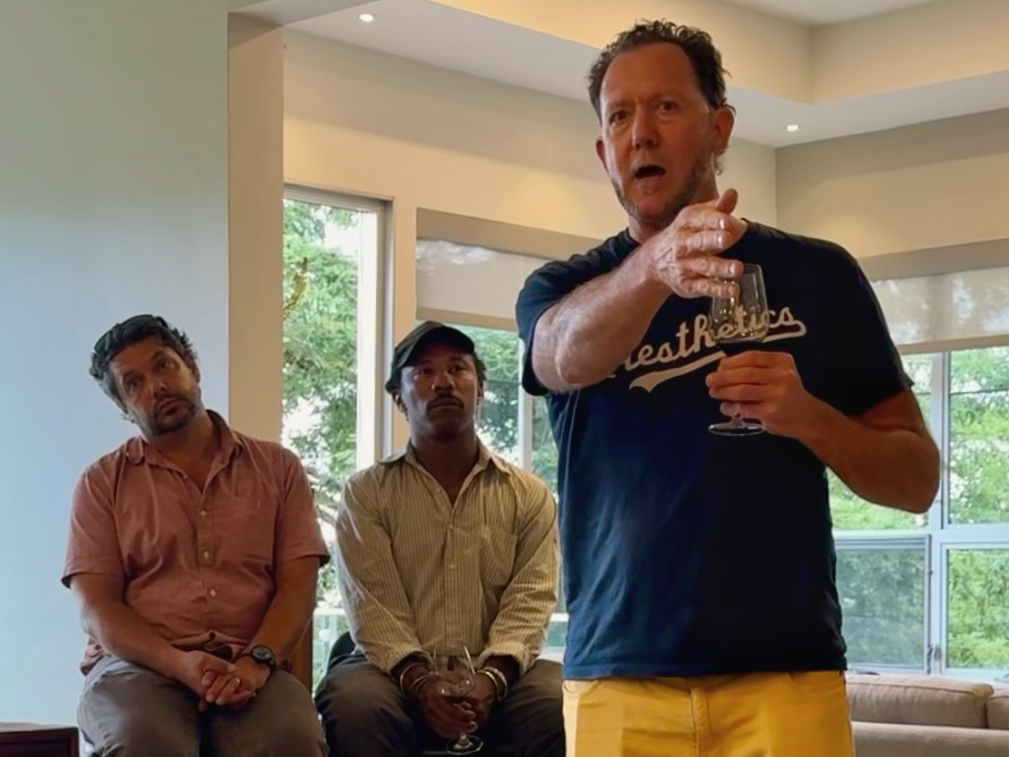
Andrew Sullivan with Matt Niess and Chris Renfro at Wine for Change
Chris Renfro — The Two Eighty Project
Chris also landed on Wine Enthusiast’s Future 40 Tastemakers 2024 and in The New York Times. After working in hospitality and on the buying side of the wine industry, Chris shifted into viticulture. He stumbled upon Alemany Farm — a public park nestled between San Francisco’s Interstate 280 and the housing projects — where all produce harvested is 100% free to the public. And there, in this unlikely urban farm, stood eight rows of grapevines.
Alemany Farm is a model for public land use that can help feed the community and reconnect people to the land and our food sources. Chris now manages the Alemany vineyard and in 2019 founded The Two Eighty Project as a way to increase access, equity, and diversity in the wine industry through paid apprenticeships that create a pathway into an industry where too few BIPOC and LGBTQ+ people feel welcomed or hold positions of leadership or ownership. Chris is on a mission to change that, and we need to support him.
Chris discussed and poured L’Amalgame — a field blend he collaborated on with Matt Niess, drawing from over 100 American hybrid grape varieties grown at the historic Filoli House in Woodside, blended with Russian River Pinot Noir. Like its name, it unites two winemakers and their missions: Chris’s vision of community and access and Matt’s pioneering work with native and hybrid vines. In the glass, L’Amalgame reminds me of a rare, warm evening in San Francisco, just as Karl the fog settles in off the coast, giving ripe summer fruits a cool kiss of green peppercorn and rhubarb. All proceeds support The Two Eighty Project.
Chris also owns Friend of a Friend wine shop in North Beach, located at 705 Columbus Ave in San Francisco. Pro tip: after you visit the wine shop, grab dinner at Da Flora, a wonderful Italian restaurant owned and operated by my siblings-in-law, Jen and Darren.
For more information, visit www.280project.com and www.friendofafriendsf.com. You can also watch a short film about The Two Eighty Project. And consider supporting The Two Eighty Project with a donation or through your purchase of L’Amalgame.
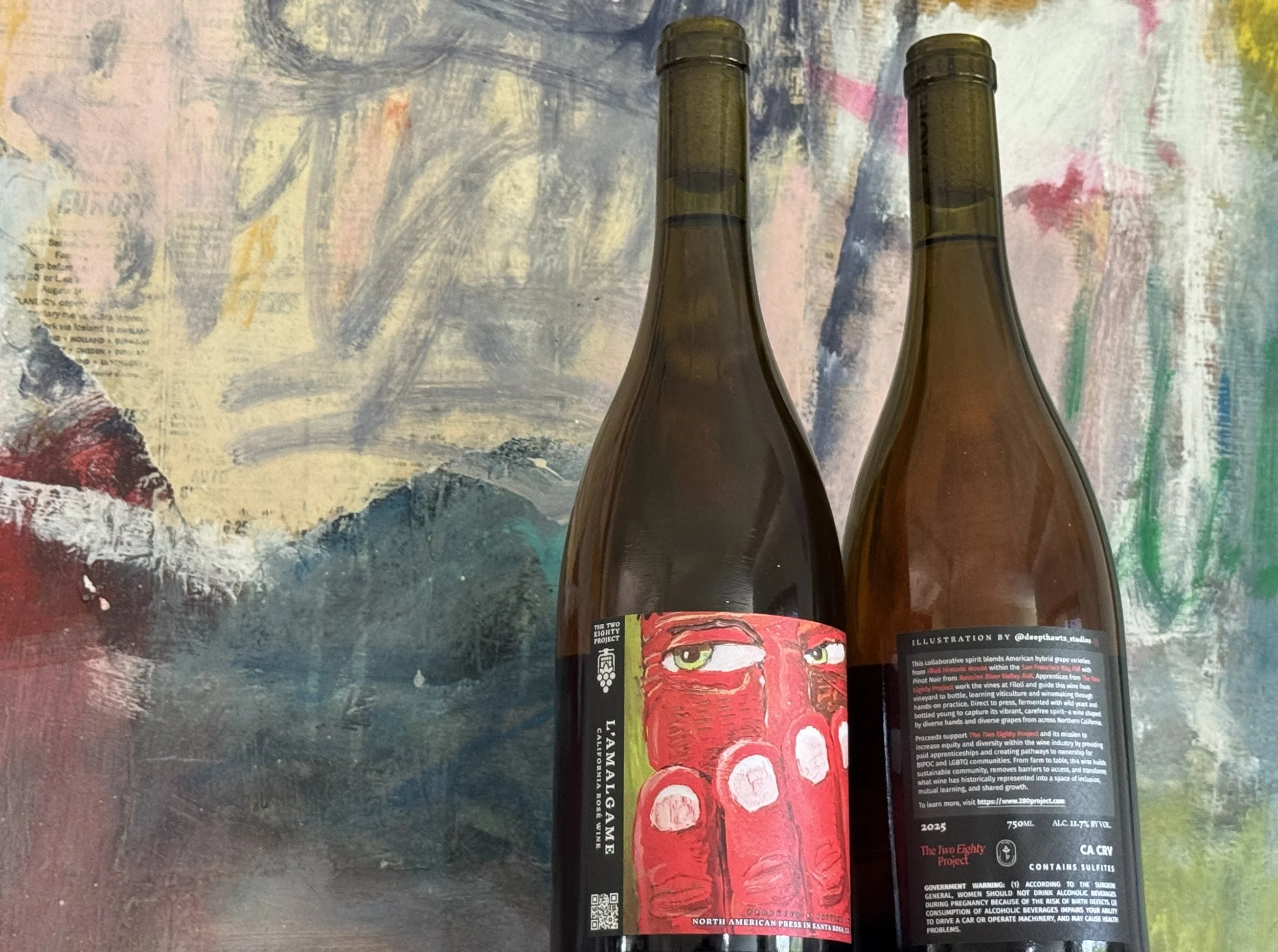
L’Amalgame wine collaboration between The Two Eighty Project x North American Press
My Key Takeaways
The wine industry has a diversity problem. Less than 1%. That’s the same sad reality for BIPOC and Latin winery owners in the US. And, while women fare a little better, at around 4% for sole owners and up to 38% for co-owners, women still make up only 14% of lead winemakers. We can be part of the solution by seeking out and supporting winemakers from these underrepresented backgrounds.
Think Local Vine to Glass. We’re due for a wine revolution. Just as Alice Waters of Chez Panisse inspired the local farm-to-table food movement in the 1970s, it’s time for wine consumers to apply those same principles to wine. After all, wine is an agricultural product. It’s just fermented grape juice. If you care about where your food comes from, who made it, and how it was made, you should also care about where and how your wine was made, who made it, and who shared in the profits. For more on this topic, read Maryam Ahmed’s article in Bon Appétit: We Champion Eating Locally, Why Don’t We Do the Same for Wine?
Get out of nature’s way. Chris recommends reading The One Straw Revolution by Masanobu Fukuoka - who espouses moving toward a “do-nothing” farming philosophy. Let’s seek out producers who practice low- or no-intervention winemaking and who prioritize the health of the soil, the workers, and the biodiversity in and around the vineyard.
Be Brave. Be Bold. Ask for what you want. Chris demonstrated this point with how he pulled together support for and continues to make connections to uplift The Two Eighty Project. Coral demonstrated it with her sales pitch to buy the wines - reminding us that it’s a tough business and small producers struggle financially. And Andrew demonstrated the point by coordinating the winemakers for this event. I never would have had the audacity to ask these esteemed winemakers to take time from their busy schedules to make the trek to the Berkeley Hills for my event. But I’m so glad Andrew did. It was a true honor to host these incredible winemakers in our home, and it was special for all who attended. Happily, we generated some good sales and great karma for the winemakers as well.
How You Can Support Artisan Winemakers
Buy wine made by independent, artisan winemakers. Many are scraping by and working incredibly hard to produce artisan products. Dear reader, you don’t have to give up your Sancerre, Barolo, or Napa Cabs, if that’s your thing, but consider creating some space in your cellar for these small, local producers too.
Buy direct. Direct-to-consumer (DTC) sales put more money in the winemaker’s pocket by cutting out intermediaries and distributors who each take a cut of their profits. Visit winemaker websites and buy a few bottles to share with friends and family.
Join a wine club. Wine clubs are great ways for winemakers to receive a consistent revenue stream throughout the year. Consider splitting a membership with a friend to double the fun and reduce your own spend - or increase the number of wine club memberships if you have a larger budget.
Create demand. Ask for local artisan producers at your favorite wine shops and restaurants. Take a bottle to dinner and pay the corkage fee. Talk to the manager, sommelier, or wine buyer and offer them a taste as you tell the winemaker’s story. Tell them you’d like to see more local wines from small producers on their list.
Amplify underrepresented voices. Follow women, BIPOC, and LGBTQ+ winemakers (and others) on social media. This helps amplify their reach and allows people who look like them to see themselves in the wine industry.
Follow Unfiltered Wine Festival on Instagram. Come to the festival. Or attend one of the Unfiltered discussions throughout the year, where a featured winemaker speaks during a seated tasting. Bring a friend.
Keep the Conversation Going
Sunday’s event reminded me why I started Wine for Change in the first place. Wine has always been a vehicle — for community, for connection, and for storytelling. Coral, David, Matt, and Chris are all making wines worth seeking out, but more than that, they’re demonstrating what this industry could look like if we increase access and expand our palates and our minds.
The conversation doesn’t end when the bottles are empty. It continues every time you buy and share wine and tell the story behind it. Let’s drink our values and support their work.
The Unfiltered Wine Festival runs July 25–26, 2026 at Donkey & Goat Winery in Berkeley. The two-day festival features both a walk-around tasting of sixty artisan winemakers and seated tastings during each of the six panel discussions. Tickets for Saturday, Sunday, or the Full Weekend Pass are on sale now at www.donkeyandgoat.com/unfiltered.
Until then, you can listen to Andrew Sullivan talk about the Unfiltered Wine Festival on episode 105 of the Indie Wine Podcast or listen to last year’s Unfiltered Wine Festival panels (episodes 86 (Adaptation), 87 (Terroir), and 88 (Flaws).
Finally, if you were lucky enough to attend this Wine for Change event, please drop a comment and share your favorite moment or your takeaway in the comments below. But if you missed this event and want to come to the next Wine for Change event, please reach out and contact me the old fashioned way or slide into my DMs on Instagram (@WineforChange or @Op.Edible).